 Ascend Israel Properties
EN
|
ES
|
FR
Ascend Israel Properties
EN
|
ES
|
FR
Ascend Israel Properties
EN
|
ES
|
FR
Ascend Israel Properties
EN
|
ES
|
FR
A community-by-community map of diaspora property concentration across Israel — Tel Aviv, Jerusalem, Netanya, Bat Yam, Ra'anana, Herzliya — and what each profile is actually looking for.
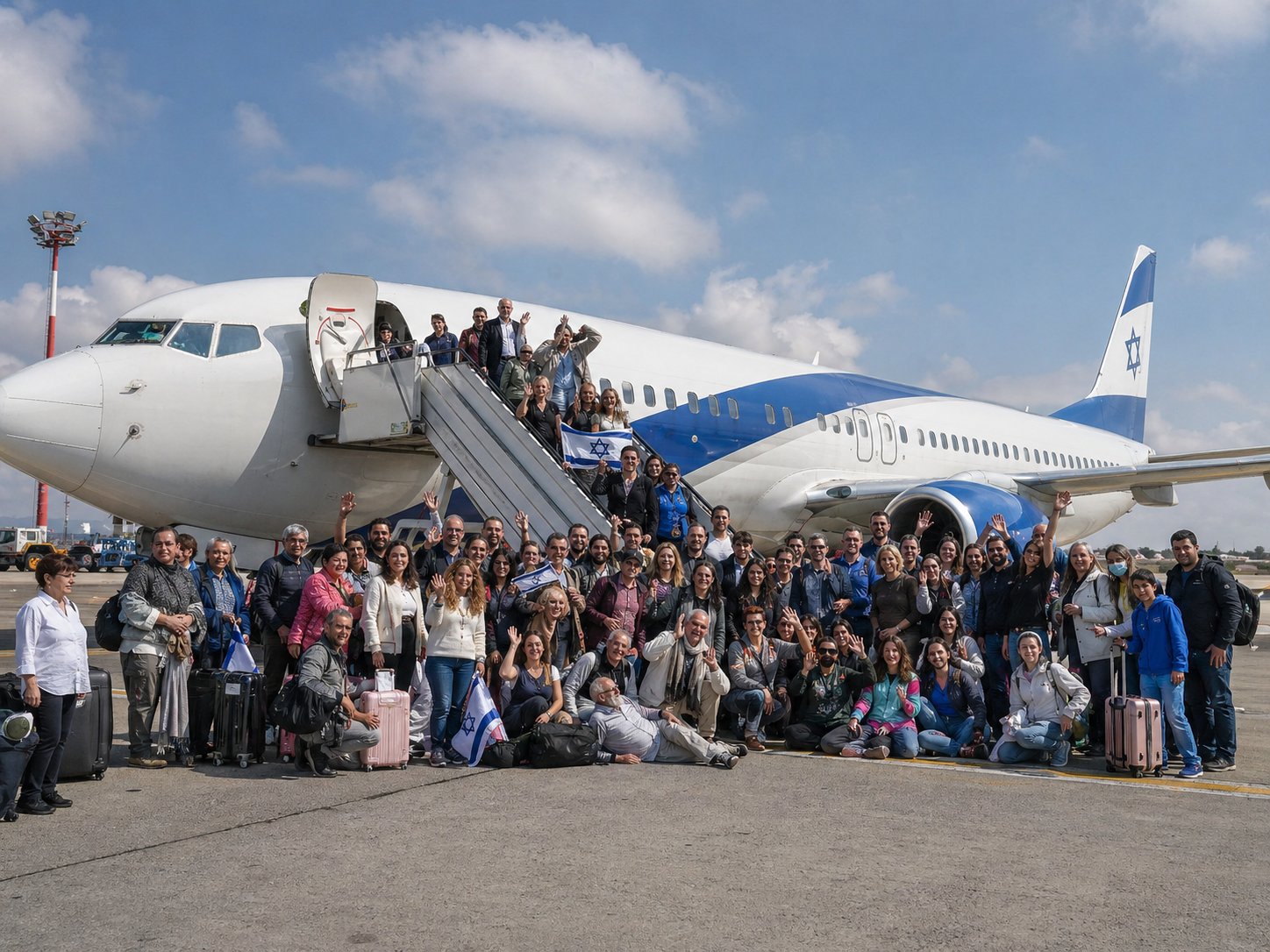
Diaspora property buying in Israel is not a single phenomenon. It is four distinct phenomena — French, American, British, and Australian — that exhibit different geographic preferences, different price-point profiles, different neighborhood priorities, and different relationships to Hebrew, English, and French language infrastructure. The agencies that sell to all four communities with the same script tend to underperform the agencies that understand the differences.
After three years of guiding clients from each of these communities into the right neighborhoods, the patterns are clear enough to map systematically. This article walks through each diaspora community's actual buying behavior, the neighborhoods they concentrate in, and what makes each match work — or not work — for each profile.
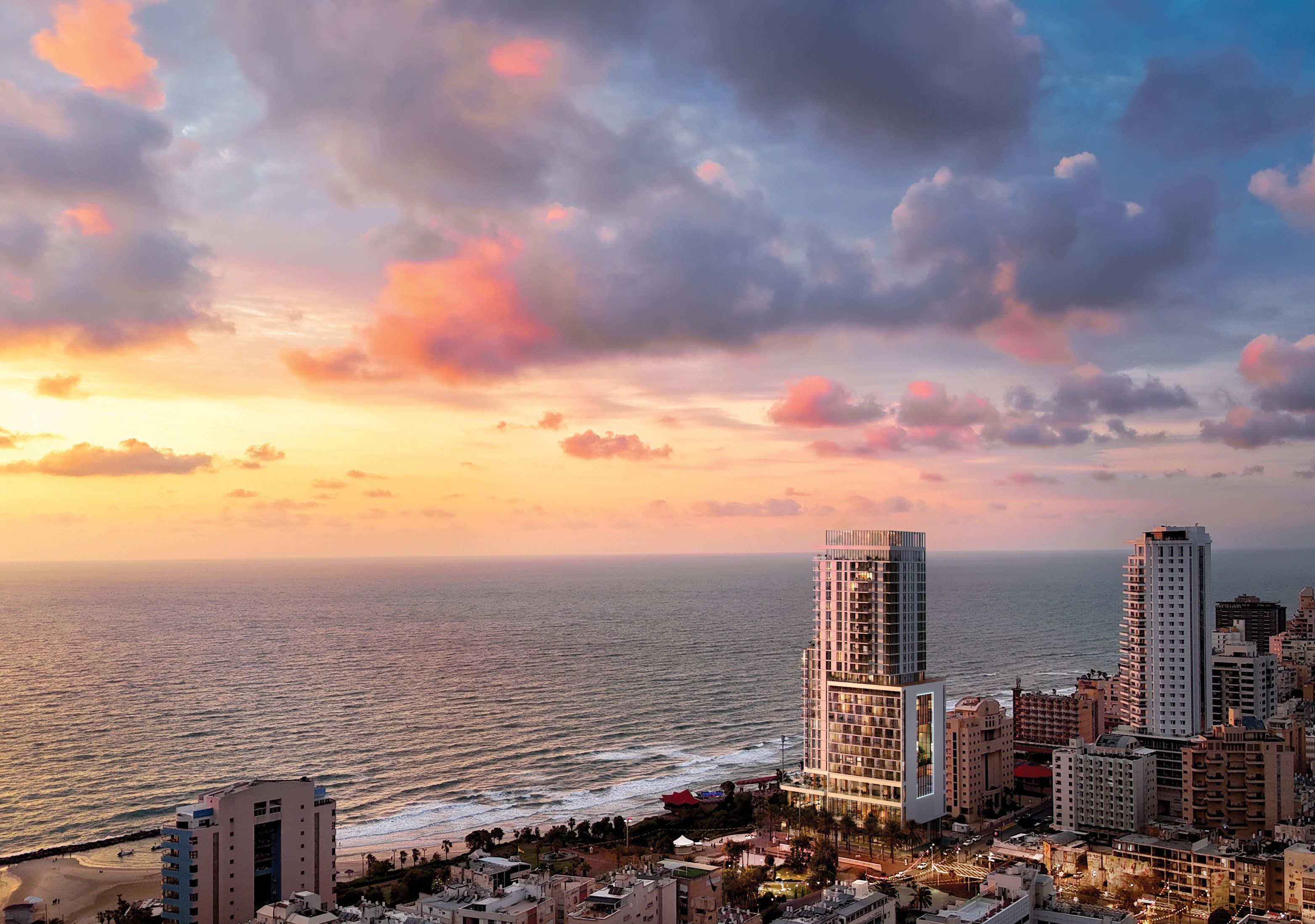
French buyers form the largest non-American diaspora purchasing community in Israel and the most geographically distinct. Netanya is to French buyers what Boca Raton is to American snowbirds — the city has been transformed by sustained French acquisition over the past two decades, and the French presence is visible in the language of street signage, the restaurant landscape, the synagogues, and the schools. Approximately 30,000 French citizens live in Netanya as of 2026, and a meaningful additional share of the city's residential stock is owned by French citizens who use it seasonally or rent it out.
The French preference for Netanya is multi-causal. The French school system in Israel maintains a meaningful presence in the city; French-speaking medical and legal professionals are concentrated there; major French-Israeli synagogues sit in central Netanya. The price point also fits the French buyer profile: typical Netanya luxury apartments transact at ₪2 million to ₪5 million, accessible to a broader cross-section of the French diaspora than the equivalent Tel Aviv inventory. Coastal Netanya (Ir Yamim, Poleg, Kiryat HaSharon) and the developing northern boulevards offer Mediterranean lifestyle at a price point that is affirmatively chosen rather than reluctantly accepted.
The Esther Netanya is one of our portfolio's strongest matches for French buyers — heritage architecture, coastal positioning, walkable to French-community infrastructure. Roughly half of pre-launch interest at this development came from French buyers.
Beyond Netanya, French buyers concentrate in two specific Jerusalem neighborhoods: Talbiya and Rehavia. Both are historically associated with diplomatic and academic communities, both have walking-distance access to the Jewish quarter and the Old City, and both have seen sustained French acquisition for spiritual and family-connection reasons rather than primary investment thesis. Average price points run higher than Netanya — ₪4 million to ₪10 million is typical — and the buyer profile skews older, with significant generational wealth transfer in evidence.
Jerusalem French buyers also have meaningful presence in Baka and the German Colony, though these neighborhoods are more dominated by American buyers. The French presence in Jerusalem is concentrated, distinguishable, and aware of itself as a community.
The most interesting French buying trend of the past three years has been the migration toward Tel Aviv at higher price points. French buyers who would historically have chosen Netanya are increasingly choosing Tel Aviv when their budgets reach ₪6 million and above — particularly the Sde Dov coastal corridor and the Old North. The shift reflects both rising affluence in the French-Israeli buyer pool and a generational change as younger French buyers prioritize the Tel Aviv lifestyle that an older generation might have found too secular or too far from established French infrastructure.
Rainbow Tel Aviv at Sde Dov has attracted significant French interest specifically because the project's ecology-forward design and beachfront positioning resonate with French aesthetic preferences in ways that more conventional Tel Aviv towers do not.
American Jewish buying in Israel is more geographically diverse than the French pattern but exhibits clear sub-community concentration. The dominant variable for American buyers is religious observance level: Orthodox American buyers concentrate in different neighborhoods than Conservative or Reform American buyers, and these distinctions matter materially for which neighborhoods are right for which buyer.
Jerusalem is the geographic and emotional center of American Jewish property buying. Within Jerusalem, four neighborhoods dominate American interest, each with distinct profiles.
The German Colony (Hamoshava HaGermanit) is the most established American Jewish neighborhood in Jerusalem and remains the gold standard for diaspora-buyer concentration. Walking distance to the Jewish quarter, mixed Modern Orthodox and Conservative American community, sustained price appreciation, and one of the highest English-language densities in any Israeli neighborhood. Typical apartment prices: ₪4 million to ₪12 million. Buyers here often have multi-generational connections to Israel and intend the property to remain in the family across decades.
Baka sits adjacent to the German Colony and has captured significant American buying overflow as German Colony inventory has tightened. The neighborhood mix is similar — Modern Orthodox skew, strong English-speaking community, walkable streets — at price points typically 15 to 25 percent below the German Colony. For American buyers prioritizing community over absolute address, Baka is often the better value.
Arnona has emerged in the past five years as a fast-growing American-buyer neighborhood, particularly for buyers seeking newer construction. The neighborhood includes both established sections and significant new development; the buyer profile skews slightly younger than the German Colony or Baka. Price points run ₪2.5 million to ₪6 million for typical apartments.
Talbiya and Rehavia attract a smaller but meaningful share of American buying, particularly at the higher price points. These neighborhoods are historically more cosmopolitan and academically oriented than the German Colony cluster, and they appeal to American buyers whose connection to Israel is intellectual or diplomatic as much as religious.
American buyers in Tel Aviv divide into two clear groups. The first — secular American Jews and Modern Orthodox American buyers comfortable in mixed religious environments — concentrate in the Old North (Tzafon Hayashan), Neve Tzedek, and the Sde Dov corridor as it develops. Average prices run ₪5 million to ₪25 million. The buyer profile typically includes American technology and finance professionals with strong Israeli connections, often with adult children who attended Israeli universities or did extended Israel programs.
The second group — Modern Orthodox American buyers prioritizing Shabbat-friendly walkable communities — has historically been smaller in Tel Aviv but is growing as Modern Orthodox infrastructure expands in Tel Aviv proper and in the Givatayim border area. The growth here over the past five years has been meaningful and is changing the buyer composition of certain Tel Aviv neighborhoods.
Outside the Tel Aviv-Jerusalem corridor, the heaviest American Jewish buyer concentration is in Ramat Beit Shemesh and Modi'in. These cities have been built up substantially over the past 25 years by Anglo-American Olim and now accommodate large English-speaking Modern Orthodox and Haredi communities. Average prices run lower than central Jerusalem — ₪1.8 million to ₪3.5 million for typical family apartments — and the lifestyle suits buyers whose primary intention is Aliyah rather than vacation home or investment-only ownership.
The Ascend portfolio does not currently include Beit Shemesh or Modi'in inventory because our positioning is on the boutique luxury end and these markets are dominated by family-scale rather than luxury-tier inventory. We refer clients seeking these markets to specialists; the diaspora buyers we serve at Ascend are typically targeting central coastal and central Jerusalem inventory for distinct strategic reasons.
British Jewish property buying in Israel is smaller in absolute volume than American or French buying but is geographically distinctive and has shifted significantly over the past decade.
British buyers have concentrated in Jerusalem for generations, primarily in the German Colony, Baka, and the Talbiya-Rehavia cluster — overlapping substantially with American buyer geography but with subtle differences. British buyers tend to skew older than the average American buyer, often acquire properties for retirement or extended-stay purposes, and place higher value on walkable proximity to historic religious sites than newer-construction amenities. Many British-owned Jerusalem apartments have been in family hands for two or three decades.
Ra'anana, in the Sharon region between Tel Aviv and Netanya, hosts a distinctly British community. Ra'anana's English-speaking population skews British, the local infrastructure includes British-flavored cultural institutions, and the suburban character — single-family homes, lawns, quiet streets — appeals to British buyers in a way that the more vertical, urban Israeli norm does not. Typical Ra'anana family-home prices run ₪3.5 million to ₪7 million, with the higher end approaching ₪10 million for premium properties. British buyer concentration here has been stable over many years.
Over the past five to seven years, the higher-net-worth segment of the British Jewish community — particularly buyers from London — has shifted toward Tel Aviv for primary luxury acquisitions and Herzliya Pituach for resort-style coastal homes. Tel Aviv's Old North and Neve Tzedek attract British buyers in the ₪10 million to ₪40 million range; Herzliya Pituach's seafront villas attract British buyers in the ₪20 million to ₪80 million range. This is a smaller numeric segment than the Jerusalem or Ra'anana British presence but represents disproportionate transaction value.
Australian Jewish property buying in Israel is the smallest of the four major diaspora communities by transaction volume but exhibits clear geographic patterns that distinguish it from American and British buying despite some overlap.
Australian buyers concentrate in Jerusalem more decisively than any other diaspora community except perhaps the French in Netanya. The German Colony, Baka, and Arnona host significant Australian community presence; the buyer profile typically skews Modern Orthodox or Conservative Jewish, with very strong family connections to specific Jerusalem neighborhoods often dating back generations. The flight time from Sydney or Melbourne to Israel is meaningful — typically 22 to 28 hours total transit — which means Australian buyers tend to acquire property with longer-term residency or eventual Aliyah in mind, rather than as casual vacation homes.
Like American Modern Orthodox buyers, Australian Modern Orthodox buyers cluster in Modi'in and Ramat Beit Shemesh. The Australian community in these cities is smaller than the American but exhibits the same characteristics: Aliyah-oriented purchases, family-scale apartments, English-speaking community infrastructure, and meaningful school networks.
Australian buyers at the luxury end appear in Tel Aviv with a profile similar to higher-net-worth British buyers — the Old North, Neve Tzedek, and the developing Sde Dov corridor for primary residences and the most sophisticated investment positions. The Australian luxury segment is smaller than the British equivalent but growing, particularly as Australian technology and finance wealth has compounded over the past decade and as Australian Jewish concerns about communal antisemitism have surged following October 2023.

While the geographic differences are real and meaningful, four patterns are visible across all four diaspora communities and worth surfacing because they shape every Ascend client's eventual buying decision.
All four diaspora communities prioritize walkability to community infrastructure — synagogues, schools, kosher dining, English-speaking medical care, and family-friendly streetscapes. This is true across religious observance levels and across price points. A diaspora buyer will routinely choose an apartment in a desired neighborhood over a more amenity-rich apartment in a less desired neighborhood. The community-walkability premium is real and quantifiable in transaction data; we estimate it at 15 to 25 percent of the price differential between adjacent neighborhoods.
Diaspora buyers across all four communities exhibit consistent avoidance behavior toward certain micro-markets: properties on busy traffic streets, properties in buildings without elevators (especially relevant for older buyers), properties with significant ongoing Va'ad disputes, and properties in neighborhoods experiencing demographic instability. These avoidance patterns are stronger among diaspora buyers than among Israeli buyers, who often have higher tolerance for these factors.
All four diaspora communities have shown surging acquisition activity since October 7, 2023, driven by communal antisemitism concerns in their home countries and a strategic-positioning rationale for Israeli ownership. The surge has been most pronounced among American buyers (driven by U.S. campus and urban tensions) and French buyers (sustained French communal anxiety since 2015), with British and Australian acquisition also up year-over-year. The pattern is stronger at the luxury end than at the family-home segment, which suggests the surge reflects strategic positioning rather than urgent relocation.
Buyers across all four communities are paying new attention to the coastal corridors outside Tel Aviv proper — Netanya (already established for French buyers and now expanding to American and British interest), Bat Yam (rapidly emerging for all four communities), Herzliya (long-established for Australian and British high-net-worth buyers, expanding now), and Ashdod (early-stage for diaspora interest). The pattern reflects both Tel Aviv's price compression in the luxury market and the recognition that the same Mediterranean coastline extends meaningfully beyond Tel Aviv's municipal boundaries.
The geographic concentrations described here are real, data-supported, and reflect three years of detailed observation of who is buying what, where. They should not be read as prescriptive — French buyers do buy in Tel Aviv, American buyers do buy in Netanya, British buyers do buy in Modi'in, and Australian buyers do buy in Herzliya Pituach. The map describes where each community is most heavily concentrated, not where each community exclusively buys.
For a buyer evaluating where to buy, the map serves three functions. First, it identifies the neighborhoods where you will find the most established community infrastructure for your specific diaspora profile. Second, it surfaces the neighborhoods where your diaspora community is under-represented but growing — often the best total-return opportunities, because you are buying ahead of the community concentration that drives long-term price appreciation. Third, it maps the price-point segmentation that each community has stratified into, helping you calibrate budget against neighborhood.
At Ascend, the conversation about geographic fit is one of the first conversations we have with prospective clients, and it is one of the conversations that most distinguishes attorney-led concierge buying from generic agent-led buying. An agent will show you the inventory they have. We work backward from your community profile, family configuration, intended use case, and time horizon to identify the right inventory — including, often, inventory that is not yet on the market or inventory in projects that have not yet launched.
If you are evaluating where to buy in Israel and would like to walk through your specific diaspora profile against this geographic map, we offer initial consultations without obligation. The map is more useful when applied to your particular situation than read as a generic guide.
Netanya has been the geographic center of French diaspora property buying in Israel for over two decades and remains the dominant choice for French buyers prioritizing community infrastructure (French schools, French-Israeli synagogues, French-speaking medical professionals, and French restaurants), coastal lifestyle, and price points typically below ₪5 million. Approximately 30,000 French citizens live in Netanya as of 2026. However, French buyers with budgets above ₪6 million increasingly choose Tel Aviv (particularly the Sde Dov corridor) for primary residences, and French buyers with strong religious orientation often choose Jerusalem (Talbiya, Rehavia, Baka) instead. The right answer depends on your priorities; Netanya is the highest-probability fit but not the only fit.
The German Colony's appeal to American buyers is multi-causal. First, walkability to the Jewish Quarter and the Old City — the central religious and historical sites — without requiring a car for daily life. Second, the highest English-speaking density of any Jerusalem neighborhood, with English commonly spoken in shops, restaurants, and street life. Third, deep multigenerational American family connections; many German Colony apartments have been owned by American families across two or three generations, creating a self-reinforcing community-formation pattern. Fourth, the architectural character of the neighborhood — preserved 19th-century stone buildings, leafy streets, walkable boulevards — creates a sense of place that distinguishes it from more recently-developed Jerusalem areas. Inventory is tight and prices reflect demand: typical apartments transact at ₪4 million to ₪12 million.
Bat Yam has seen substantial diaspora buyer interest emerge over the past three years, particularly for the Park HaYam coastal corridor where significant new luxury inventory has launched. The thesis is straightforward: the Mediterranean coastline does not stop at Tel Aviv's southern municipal boundary, and developments like The Island and U Towers offer beachfront positioning at price points 30 to 50 percent below comparable Tel Aviv inventory. The Bat Yam buyer is typically more sophisticated about Tel Aviv pricing — they have looked at Tel Aviv first, decided the value proposition does not work for their objectives, and identified Bat Yam as the same coast at a meaningfully better price. Diaspora interest in Bat Yam is now spread across all four major communities (American, French, British, Australian) rather than concentrated in any single community, which is itself a marker of the corridor's emerging status as primary diaspora inventory.
There is no single right answer; the choice reflects priorities. Buying in established diaspora-community-concentrated neighborhoods (German Colony for Americans, Netanya for French, Ra'anana for British) delivers community infrastructure, walkability, and lifestyle from day one, plus liquidity at sale because demand from the same community continues. Buying in emerging neighborhoods (Bat Yam, certain Tel Aviv southern districts, certain expanding Jerusalem peripheries) delivers better total return potential because you are buying ahead of community concentration, but requires longer holding periods and more comfort with neighborhood evolution. Most diaspora buyers choose established concentration for primary residences and emerging neighborhoods for investment-only positions. The two strategies are complementary.
Foreign acquisition of Israeli residential property surged dramatically in late 2023 and 2024, with monthly figures showing year-over-year increases above 100 percent in some periods. Through 2025 and into 2026, the pace has moderated from its peak but remains structurally elevated relative to pre-October-7 levels. The luxury end (₪5 million and above) has remained particularly active, with foreign buyers accounting for close to 60 percent of premium transactions at certain leading luxury agencies in 2025 and 2026 (agency-reported figures; market-wide share runs lower). Family-home transactions have moderated more, suggesting urgent-relocation demand has eased while strategic-positioning demand has held. The geographic distribution of the surge has also evolved; American buyer activity remains strongest in Jerusalem, French activity has spread further into Tel Aviv, and Australian activity has shown the steepest year-over-year growth from a smaller base.
We do not work with all Israeli inventory; certain categories of property do not fit the Ascend portfolio criteria for diaspora buyers. Border-adjacent communities (within 5 kilometers of Gaza or the northern border) carry insurance pricing variations and rental-demand risk that we do not recommend for buyers seeking primary residences or stable rental yield. Investor-heavy new-build towers in secondary Netanya and Ashdod locations have shown reduced resale liquidity and have trapped capital for some foreign buyers; we evaluate each project on its merits rather than blanket-avoiding the cities. Certain micro-markets with chronic Va'ad disputes, building-code-compliance issues, or unresolved infrastructure histories produce ongoing-cost surprises that disproportionately affect overseas owners not on-site to manage them. Our portfolio screens out these properties as a matter of course.
For diaspora buyers without recent Israeli residency or recent extensive travel, the standard evaluation sequence is: an initial consultation walking through your community profile, family configuration, religious observance level, intended use, time horizon, and budget; a curated short-list of three to five neighborhoods we believe match those priorities; detailed remote presentations of two to four properties in each neighborhood, including video walkthroughs and surrounding-area videos; and ideally a single targeted visit (4 to 7 days) to walk through the finalist properties in person and experience the neighborhoods on weekday evenings, weekend mornings, and Shabbat. Many of our clients complete the process without ever visiting in person — power of attorney enables full remote acquisition — but most clients prefer to visit before committing, and the visit experience is dramatically improved when the inventory has already been narrowed remotely to the right options.
Ra'anana's established British community has remained stable for decades and continues to attract British buyers, particularly those prioritizing suburban single-family homes, English-speaking infrastructure, family-friendly environments, and moderate price points (₪3.5 million to ₪7 million for typical family homes). The shift over the past decade has been at the higher-net-worth end of the British community: buyers with budgets above ₪10 million increasingly choose Tel Aviv (Old North, Neve Tzedek) for primary residences and Herzliya Pituach for resort-style coastal villas, viewing these as additions to or alternatives to Ra'anana rather than replacements. Ra'anana itself remains the British family-home heartland; the higher-net-worth British segment has simply expanded its geographic options.
Australian diaspora buying differs from British and American buying in three meaningful ways. First, the flight time from Sydney or Melbourne to Tel Aviv is 22 to 28 hours total transit, which means Australian buyers acquire property with longer holding horizons — typically 10+ years and often with eventual Aliyah in mind — rather than as casual vacation homes. Second, the Australian Jewish community in Israel is smaller than the American or British community, which creates distinct infrastructure priorities; Australian buyers often value being near Australian-owned businesses, Australian-Israeli synagogues, and the small but cohesive Australian community concentrations in Jerusalem and Modi'in. Third, the post-2023 Australian communal antisemitism dynamics — particularly in Sydney and Melbourne — have created urgency around Israeli property positioning that did not exist five years ago, which is reshaping the Australian buyer profile in real time. The patterns differ enough from British or American buying that we treat Australian clients with distinct community-fit analysis.
Ascend Israel Properties guides international buyers from the US, Canada, UK, Australia, and Europe through every stage of the Israeli property acquisition process — legal, financial, and logistical.
Schedule a ConsultationLegal Disclaimer. This article is provided for informational purposes only and reflects observations and patterns from Ascend Israel Properties' work with diaspora buyers from 2023 through April 2026. Geographic concentration patterns are descriptive of broad community trends, not prescriptive recommendations for any individual buyer. Real estate decisions involve highly individualized analysis of family circumstances, financial profiles, intended use, and personal preferences that this article cannot substitute for. Market conditions, neighborhood characters, and community concentrations evolve continuously. Before making any property purchase decision, consult with qualified Israeli real estate counsel and conduct in-person evaluation of any neighborhood under consideration. Ascend Israel Properties and the author do not assume liability for the accuracy or completeness of information contained herein or for any actions taken in reliance on this article. Information current as of April 26, 2026.